
 What are you looking for?
Why Is My Cat Always Meowing for Attention?
Is your cat constantly meowing for your attention? Learn why cats become extra vocal, what they may be trying to tell you, and simple ways to respond without reinforcing unwanted behavior.

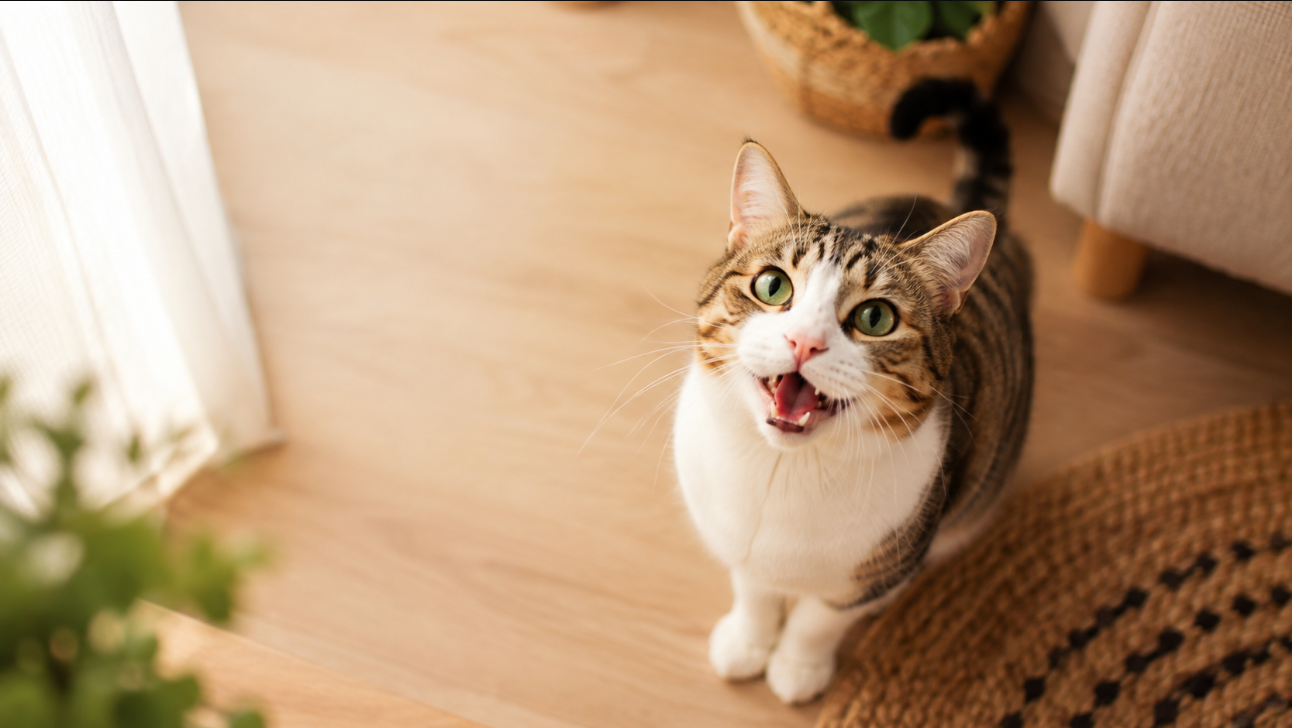
Does your cat seem to have an entire conversation waiting for you every time you walk into the room?
Some cats are naturally more vocal than others, but frequent meowing can also be your cat's way of asking for attention, food, playtime, comfort, or simply a little company.
Understanding why your cat is meowing for attention can help you respond in a way that keeps them happy without accidentally encouraging nonstop vocal demands.
Why Do Cats Meow at Humans?
Interestingly, adult cats don't rely on meowing nearly as much when communicating with other cats.
Meowing is largely a form of communication cats use with humans.
Over time, cats learn that certain sounds get certain reactions. A particular meow might make you look at them, open a door, serve dinner, or start playing.
And cats are very good at remembering what works.
1. Your Cat Wants Your Attention
Sometimes the simplest explanation is the correct one.
Your cat may meow because they want:
Petting
Playtime
Your lap
To follow you around
Someone to interact with
Cats that spend a lot of time indoors may especially seek interaction when their environment isn't giving them enough stimulation.
If the meowing usually stops after you play with or cuddle your cat, attention is probably part of the reason.
2. They're Bored
Indoor cats may have plenty of food and comfortable places to sleep but still lack opportunities to explore, hunt, climb, and solve problems.
Boredom can show up as:
Frequent meowing
Following you everywhere
Waking you up
Knocking things over
Excessive grooming
Sudden bursts of energy
Adding short interactive play sessions throughout the day can often make a noticeable difference.
Try wand toys, small hunting games, puzzle feeders, cardboard boxes, climbing spaces, or simply rotating toys so they feel new again.
3. They've Learned That Meowing Works
Cats learn patterns surprisingly quickly.
Imagine this routine:
Your cat meows.
You immediately give them a treat.
The next day, your cat tries it again.
It works.
Soon, you've accidentally taught your cat:
Meow = human delivers reward.
This doesn't mean you should ignore your cat completely. Instead, try rewarding calm behavior too.
For example, wait for a short quiet moment before giving treats, food, or attention.
4. They Want to Play
Cats are natural hunters.
Even indoor cats still have the instinct to stalk, chase, pounce, and catch things.
A cat repeatedly walking toward you while meowing — especially near their favorite toy — may simply be requesting a hunting session.
Two or three short play sessions can sometimes be more effective than one long session.
Try playing for around 5–15 minutes at a time and allow your cat to occasionally "catch" the toy.
5. It's Part of Their Daily Routine
Cats love routines.
They quickly recognize patterns such as:
You wake up → breakfast happens.
You sit on the sofa → cuddle time.
You enter the kitchen → maybe food appears.
If your cat regularly meows at the same time each day, they may simply be anticipating something associated with that routine.
This is especially common around feeding time.
6. Your Cat May Be Lonely
Although cats are often described as independent animals, many form strong social bonds with both humans and other animals.
Some cats become noticeably more vocal when their favorite person has been away for several hours.
You may notice your cat greeting you at the door, following you around, rubbing against your legs, or meowing repeatedly after you return home.
That doesn't necessarily mean something is wrong.
Sometimes they're just saying:
"Where have you been?"
7. They May Be Trying to Tell You Something Else
Not every meow is simply an attention request.
Cats may vocalize when they are hungry, uncomfortable, stressed, confused, or experiencing changes in their environment.
Pay attention to sudden changes.
If a normally quiet cat suddenly becomes extremely vocal — especially alongside changes in appetite, drinking, litter box habits, movement, sleep, or behavior — it's worth discussing the change with a veterinarian.
Behavior changes can occasionally have medical causes.
Should You Ignore a Cat That Meows for Attention?
Not completely.
The goal isn't to stop communicating with your cat.
Instead, try to understand what the meow means.
If your cat has food, water, a clean litter box, enrichment, exercise, and no obvious health concerns, you don't necessarily need to respond instantly to every demand.
Rewarding calm behavior can help prevent your cat from learning that increasingly loud meowing is the fastest way to get what they want.
How to Reduce Attention-Seeking Meowing
A good daily routine can make a big difference.
Try giving your cat predictable periods for:
Interactive play
Feeding
Grooming
Exploring
Rest
Attention
Environmental enrichment matters too.
Window perches, scratching posts, climbing areas, puzzle feeders, toys, and hiding places give indoor cats more ways to use their natural behaviors.
The objective shouldn't be to make your cat completely quiet.
Meowing is communication.
The goal is to make sure your cat has enough healthy ways to express their needs.
Every Cat Has Their Own Voice
Some cats quietly chirp.
Others seem determined to narrate their entire day.
Learning your cat's individual sounds, routines, and body language makes it much easier to understand what they're asking for.
And sometimes?
They really do just want you to look at them.
Here at Lylo & Mingming, we think learning these little communication habits is one of the most interesting parts of living with cats.
Because after a while, you realize they're not just making noise.
They're having a conversation with you.

How Often Should You Clean Your Cat’s Litter Box?
A clean litter box keeps your cat comfortable and makes it easier to notice changes in their health. Learn how often to scoop, replace litter, wash the box, and keep odors under control.
Why Do Cats Purr? 7 Reasons Behind That Familiar Sound
Cats don't only purr when they're happy. Discover why cats purr, what different purrs can mean, and how body language helps you understand what your cat is trying to tell you.
Discussion
Questions, cat stories, and friendly thoughts are welcome.
Loading comments…