
 What are you looking for?
Why Cats Have Such Different Personalities: Understanding What Makes Your Cat Unique
From fearless explorers to quiet observers, every cat has their own way of experiencing the world. Understanding those differences can help you build a stronger, calmer relationship with your cat.

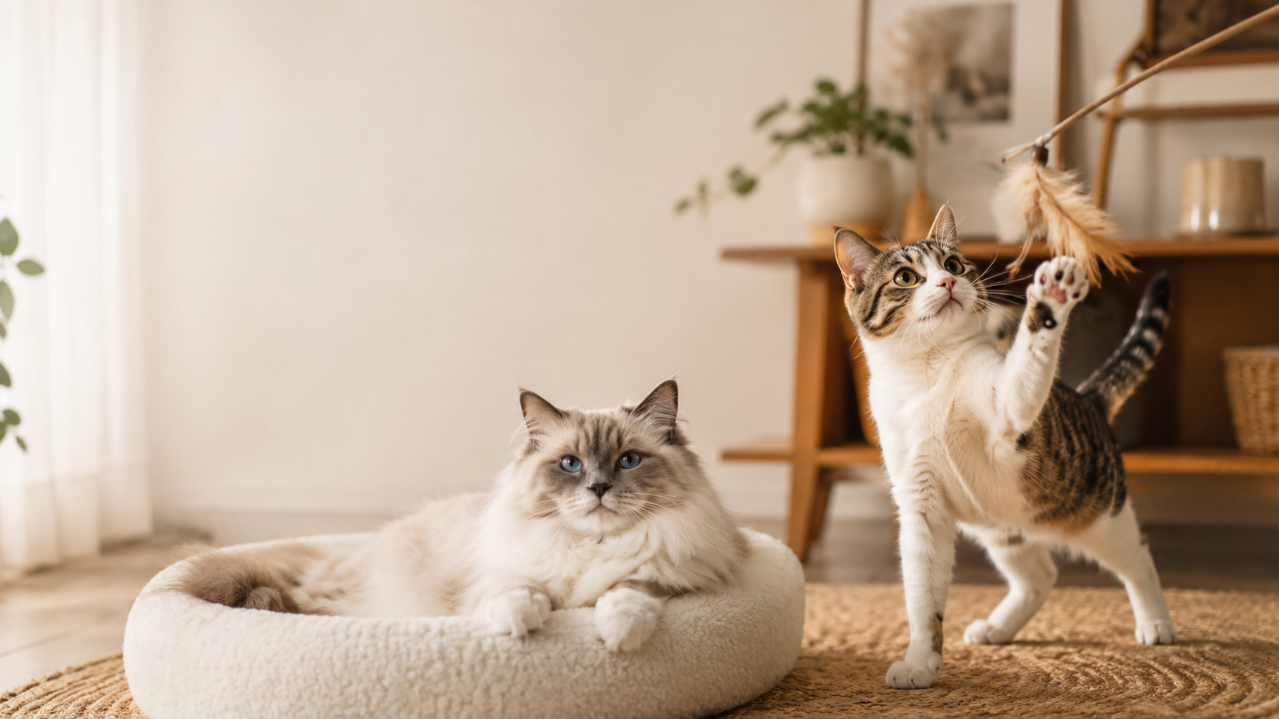
Cats may share many instincts, but they are far from identical. One cat may greet every visitor at the door, while another disappears beneath the bed before the doorbell has even finished ringing. Some cats want to participate in everything you do. Others prefer to observe quietly from a comfortable distance. These differences are not random quirks. They are part of each cat’s individual personality.
Understanding your cat’s personality can make everyday life easier for both of you. Instead of expecting every cat to behave the same way, you can learn what makes your own cat feel confident, curious, playful, affectionate, or overwhelmed.
Personality Is More Than Being Friendly or Shy
When people describe a cat, they often use simple labels such as friendly, shy, lazy, or playful. Those words can be useful, but a cat’s personality is usually more complicated.
A confident cat may still dislike being picked up. A shy cat may become extremely affectionate with one trusted person. A playful cat may love chasing toys but have little interest in wrestling with another cat.
Personality is better understood as a combination of different tendencies.
For example, a cat may vary in:
- curiosity toward new objects
- confidence around unfamiliar people
- tolerance for handling
- interest in physical affection
- energy and playfulness
- independence
- sensitivity to sounds or movement
- willingness to share space with other animals
- adaptability when routines change
Looking at several traits together gives you a much clearer picture than simply deciding that a cat is “friendly” or “not friendly.”
Early Experiences Can Shape Confidence
A kitten begins learning about the world very early. Gentle interactions, exposure to normal household sounds, positive encounters with people, and safe opportunities to explore can all influence how comfortable that kitten becomes with new experiences.
That does not mean every well-socialized kitten will grow into an outgoing adult.
Individual temperament still matters.
Two kittens raised in the same home can react very differently to the exact same situation. One may immediately investigate a cardboard box placed on the floor. The other may watch it carefully from across the room before approaching twenty minutes later.
Neither reaction is necessarily wrong.
They simply have different thresholds for curiosity and caution.
A confident cat is not automatically happier than a cautious cat. What matters is whether the cat feels safe enough to make choices at their own pace.
Genetics May Play a Role Too
Some parts of temperament may also be influenced by genetics. Certain cats naturally appear more adventurous, energetic, reactive, or socially motivated than others.
However, genetics should never be treated like a guaranteed personality blueprint.
A cat’s behavior develops through a mixture of inherited tendencies, experiences, environment, health, learning, and relationships.
This is one reason predicting an adult cat’s personality from appearance alone is unreliable.
A fluffy cat is not automatically calm.
A small cat is not automatically timid.
And an impressive-looking cat may secretly be terrified of the vacuum cleaner.
Watch How Your Cat Approaches New Things
One of the easiest ways to understand personality is to observe how your cat reacts when something changes.
Imagine placing a new cat tunnel in the living room.
The Explorer
An adventurous cat may walk directly toward it, sniff everything, enter immediately, and begin playing.
The Investigator
A more careful cat may circle the tunnel several times, sniff it from different angles, and eventually enter once satisfied that it is safe.
The Observer
Another cat may sit several meters away and watch.
The observer might investigate later that evening when the house becomes quiet.
All three cats are gathering information. They simply use different strategies.
Forcing the cautious cat into the tunnel would not make them more confident. It may actually teach them that new objects are unpredictable.
Letting them investigate voluntarily builds trust instead.
Affection Looks Different From Cat to Cat
People sometimes assume that a cat who does not enjoy being held is less affectionate.
That is rarely a useful way to judge the relationship.
Cats can show attachment in many quieter ways.
Your cat may:
- sit beside you instead of on your lap
- sleep near your feet
- follow you between rooms
- slowly blink while looking at you
- greet you when you return home
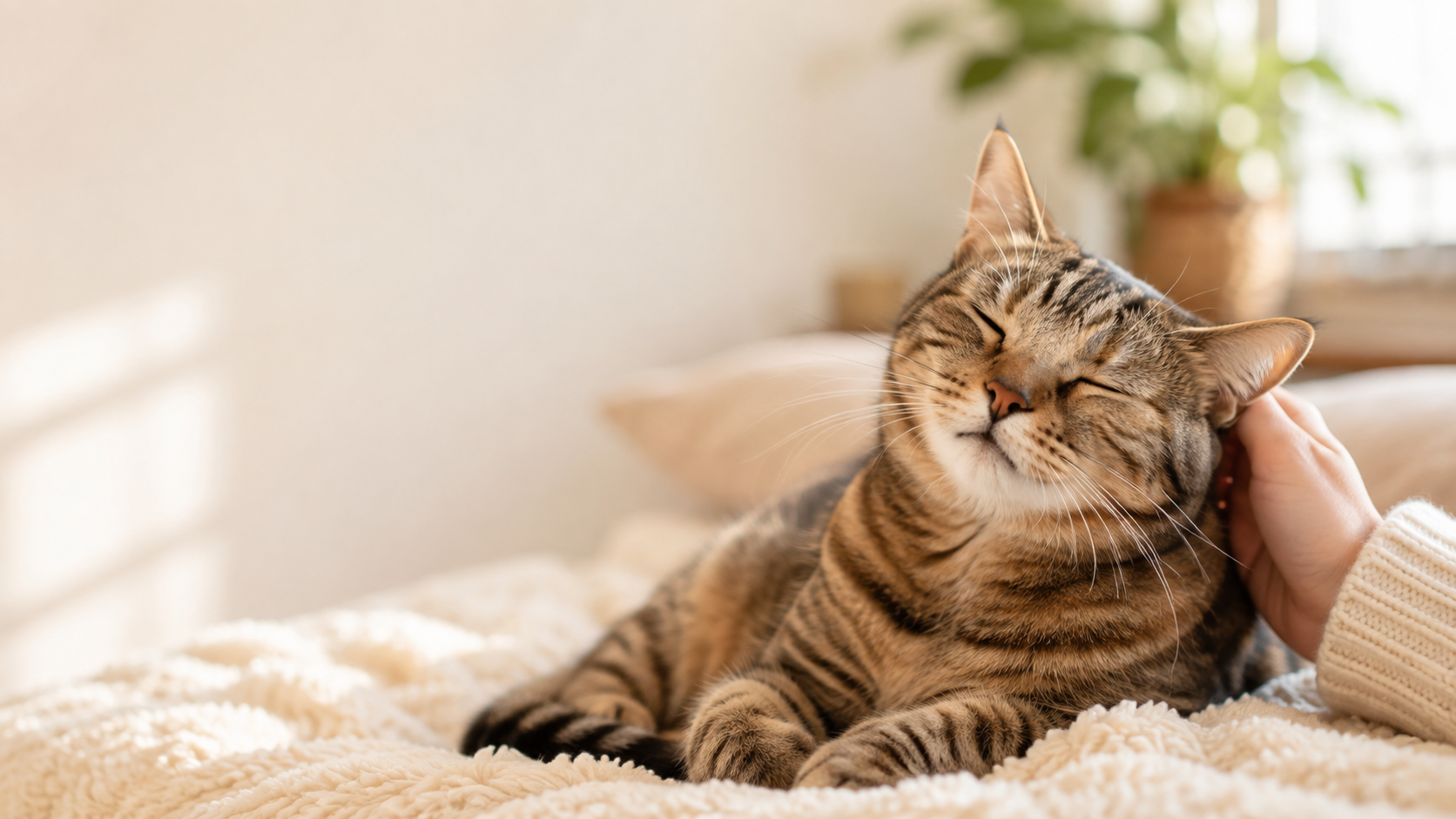
- rub their face against your hand
- bring a toy into the room where you are sitting
- choose to nap in the same space
- quietly supervise everything you do
For some cats, simply choosing to remain nearby is a significant expression of trust.
Respect Their Preferred Social Distance
Every cat seems to have an invisible comfort bubble.
For one cat, that bubble may be tiny. They want to sleep against your arm while you work.
For another, sitting on the opposite side of the sofa may feel perfectly affectionate.
Problems can appear when humans repeatedly cross that preferred distance.
A cat that tolerates petting for twenty seconds may become uncomfortable when petting continues for two minutes. The human thinks, “But you were enjoying it.”
The cat thinks, “I was finished ninety seconds ago.”
Learning when to stop is just as important as learning when to interact.
Body Language Gives You Clues
Personality and body language are closely connected, but they are not the same thing.
Body language tells you how the cat is feeling right now.
Personality helps explain how that cat tends to respond across many situations.
Watch the whole body rather than focusing on one signal.
Pay attention to:
- ear position
- tail movement
- pupil size
- body tension
- posture
- whisker position
- distance from the trigger
- whether the cat approaches or retreats
A single tail flick does not tell the whole story.
Context matters.
Play Style Can Reveal Personality
Play is another great window into your cat’s preferences.
Some cats are enthusiastic hunters. They chase toys across the room and leap into the air.
Others prefer slower games.
One cat may love:
- fast wand toys
- jumping
- chasing rolling objects
- tunnels
Another may prefer:
- hiding behind furniture
- stalking slowly
- puzzle feeders
- batting small toys from a comfortable position
A cat that ignores one toy is not necessarily uninterested in play.
You may simply be offering the wrong style of game.
Try Matching the Toy to the Cat
For a cautious cat, start with slower movement and more distance.
For a high-energy cat, longer chase sequences may be more satisfying.
For a curious cat, rotating toys can keep the environment interesting.
The goal is not to make every cat play the same way.
The goal is to discover what makes your cat engage.
Routine Matters More to Some Cats Than Others
Some cats seem almost completely unbothered by change.
Move a chair? Fine.
Invite visitors? Interesting.
Serve dinner thirty minutes late? Acceptable.
Other cats notice everything.
They know exactly when meals normally appear. They recognize the sound of specific doors opening. They may investigate when furniture moves five centimeters from its usual position.
For these cats, predictable routines can provide security.
That does not mean their environment should never change.
Instead, introduce changes gradually when possible.
Give the cat time to investigate.
Keep familiar resting places available.
And avoid changing several important things at once unless necessary.
Multi-Cat Homes Make Personality Differences Obvious
Living with more than one cat can make individual personalities especially easy to notice.
One cat may rush toward a toy while another waits until the first cat is finished.
One may always choose the highest sleeping spot.
Another may prefer enclosed spaces near the floor.
These differences can occasionally create tension if resources are limited.
Providing multiple options can help.
Consider having:
- several resting locations
- multiple water sources
- more than one scratching area
- different types of hiding places
- separate feeding areas when needed
- both high and low observation spots
The goal is to give each cat opportunities that match their preferences.
Do Not Force Cats to Become the Same
This is especially important when comparing two cats.
It is tempting to think:
“Lylo loves visitors. Why doesn’t Mingming?”
Or:
“Mingming sits on my lap. Why won’t Lylo?”
But comparison can create unrealistic expectations.
A better question is:
How does this particular cat show that they feel comfortable?
Progress for a cautious cat might be walking into the same room as a visitor.
Progress for an outgoing cat might be learning not to climb directly into the visitor’s bag.
Different personalities require different definitions of success.
Personality Can Change Over Time
Cats are not frozen into one personality forever.
A young cat may become calmer with age.
A cautious cat may gradually become more confident after months in a secure home.
A previously independent cat may become more affectionate as trust develops.
Environment matters too.
Moving house, introducing another pet, changing routines, or experiencing stressful events can temporarily change behavior.
This is why it helps to know your cat’s normal baseline.
If you understand what is typical for them, unusual behavior becomes easier to notice.
Sudden Changes Deserve Attention
Gradual personality development is normal.
A sudden major behavioral change is different.
If a normally social cat begins hiding constantly, a playful cat suddenly stops interacting, or a calm cat becomes unusually irritable, do not automatically assume their “personality changed.”
Behavior can sometimes be affected by discomfort, stress, or illness.
If a noticeable change appears suddenly or persists, consider discussing it with a veterinarian.
Build the Environment Around the Cat You Actually Have
It is easy to design an ideal life for an imaginary cat.
The better approach is to observe the real one living in your home.
Does your cat love height?
Provide stable elevated resting spaces.
Do they retreat when visitors arrive?
Make sure they always have a quiet escape route.
Do they enjoy watching outside?
Create a safe window perch.
Do they dislike being carried?
Interact with them at floor level instead.
Do they have endless energy in the evening?
Schedule an interactive play session before bedtime.
Small adjustments can dramatically improve a cat’s comfort.
Give Them Choices
Choice is one of the simplest ways to respect personality.
Allow your cat to choose:
- whether to approach a visitor
- which bed to use
- whether to participate in play
- when to leave an interaction
- where to observe the room
- whether they want physical contact
A cat that knows they can leave often becomes more willing to stay.
That sense of control can make interactions feel safer.
Trust grows when a cat learns that saying “not now” is allowed.
Learn Their Version of Happiness
There is no single personality that makes a “perfect” cat.
The fearless explorer who investigates every grocery bag is wonderful.
The thoughtful observer who spends five minutes studying a new toy before touching it is wonderful too.
Some cats make their feelings obvious.
Others reveal themselves slowly.
The fun part of living with cats is discovering the small preferences, rituals, and habits that make each one unmistakably themselves.
When you stop asking your cat to behave like every other cat, you begin noticing something much more interesting:
their personality was communicating with you all along.
Discussion
Questions, cat stories, and friendly thoughts are welcome.
Loading comments…