
 What are you looking for?
What Life Is Really Like for Stray Cats
For a stray cat, every ordinary day can mean finding food, avoiding danger, staying dry, and figuring out which humans are safe. A closer look at what life on the streets is really like—and the small ways we can make it easier.

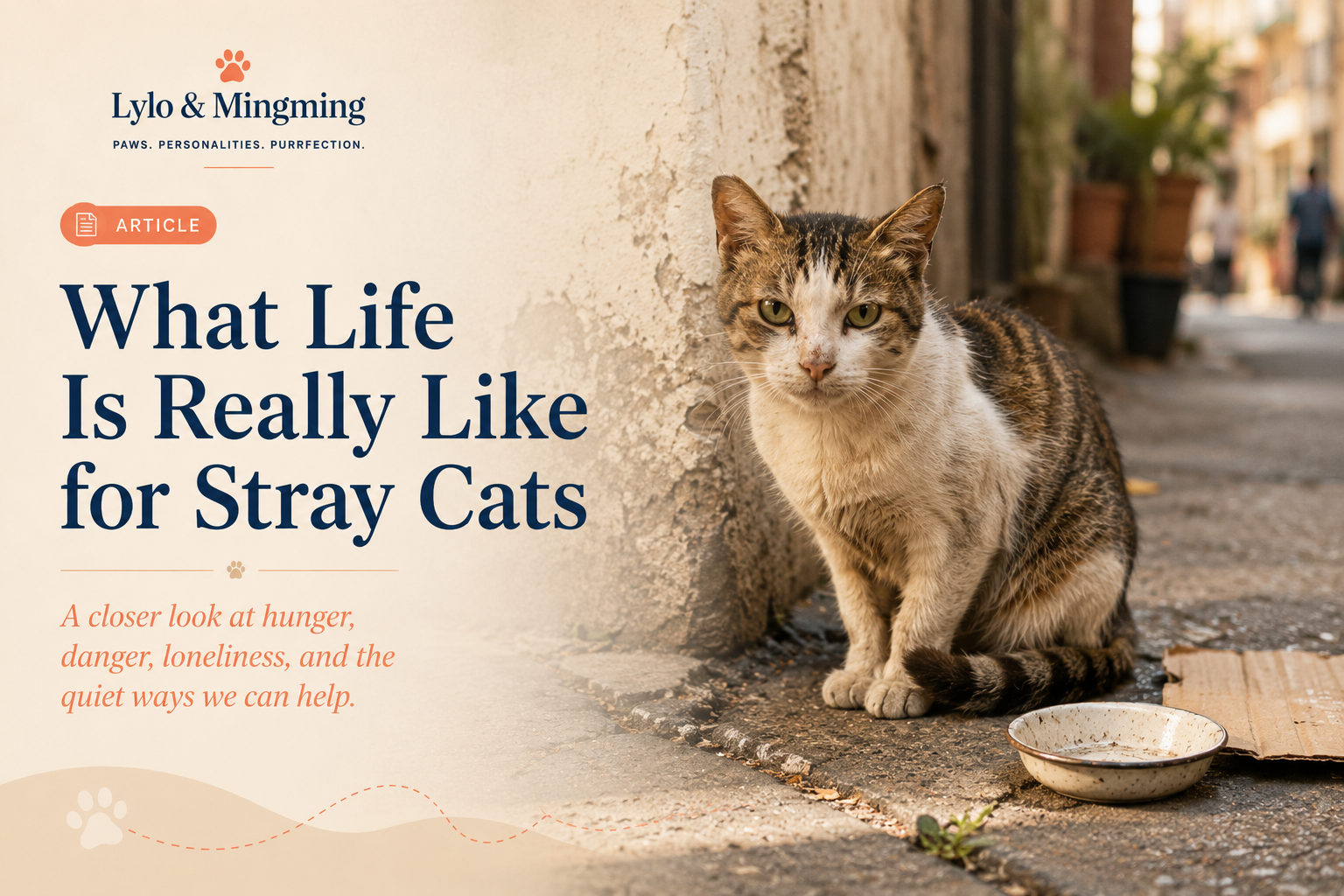
There is a cat that lives near a small shop.
Maybe you've seen one like him before.
He appears around the same time every evening, waits near the back door, and watches people from a safe distance. Someone occasionally leaves food. Someone else gives him water. He knows which motorcycles are harmless, which dogs to avoid, and exactly where to disappear when rain starts falling.
To most people passing by, he might look independent.
Maybe even free.
But life outside is rarely that simple.
For a cat living on the street, things we take for granted—food, clean water, a dry place to sleep, safety—have to be found again and again.
Every single day.
Not Every Cat Outside Has the Same Story
Before talking about stray cats, it helps to understand that cats living outdoors aren't all the same.
Some were once pets.
They may have become lost, abandoned, or separated from their families. These cats are often still comfortable around people and may actively seek human attention.
Others were born outdoors and have had little contact with humans.
These cats are often called feral or community cats. They may be perfectly capable of living around people while keeping their distance from them.
And then there are cats somewhere in between.
A cat may trust the woman who feeds him every morning but disappear the moment anyone else approaches.
Another may sleep outside during the day but quietly visit several houses for dinner.
Street cats develop their own routines.
Their lives are more complicated than simply being “homeless cats.”
Food Is Never Guaranteed
Indoor cats have an enormous privilege they don't understand.
Dinner happens.
Maybe five minutes late.
Maybe served in the wrong bowl.
Maybe with enough dramatic meowing to suggest a major human rights violation.
But it happens.
For a stray cat, food isn't guaranteed.
Some survive because people regularly feed them.
Others search through rubbish, hunt small animals, visit restaurants or markets, or travel between several locations where they have learned food might appear.
One successful meal doesn't mean tomorrow's meal is waiting.
And cats don't always have the luxury of being picky.
That becomes especially difficult for kittens, older cats, pregnant or nursing mothers, and cats already struggling with illness.
Water Can Be Harder to Find Than Food
People often think about feeding stray cats but forget about water.
Clean drinking water can be surprisingly difficult to find outdoors.
A cat may end up drinking from:
Puddles
Drains
Plant saucers
Dirty containers
Standing rainwater
In hot weather, access to fresh water becomes even more important.
Something as simple as placing a clean bowl of water in a shaded location can make a genuine difference.
It isn't dramatic.
It isn't a rescue story.
It's just water.
But sometimes the useful things are exactly that simple.
The Street Never Completely Switches Off
Cats are good at finding quiet corners.
Under parked cars.
Behind buildings.
Inside unused structures.
Between boxes.
Under stairs.
But “hidden” doesn't always mean safe.
Traffic is one of the obvious dangers.
Cats may sleep underneath or near vehicles because those places provide shade, warmth, or shelter. Unfortunately, drivers may never know they're there.
Dogs can be another threat.
So can territorial fights with other cats.
Then there are hazards humans barely notice: sharp objects, toxic chemicals, construction sites, poisoned food, traps, and places where a frightened cat can become stuck.
A street cat learns to be alert because being careless can have consequences.
That caution can sometimes be mistaken for being unfriendly.
Often, the cat has simply learned that staying alive requires a little suspicion.
Rain Changes Everything
A house cat can spend an entire storm sleeping through the afternoon.
A stray cat has to find somewhere dry.
Cardboard becomes useless when soaked.
Open ground becomes cold.
Food left outside gets wet.
Safe hiding places may suddenly disappear.
Even cats that normally handle outdoor life well can struggle during extreme weather.
Very young kittens and older or sick cats are especially vulnerable.
In hot climates, shade and water matter.
In cold climates, dry insulated shelter can become critical.
Street life changes with the weather because street cats don't have the option of closing a window and going back to bed.
Small Health Problems Don't Stay Small
This may be one of the hardest parts of life outside.
An indoor cat gets a small wound and someone notices.
A stray cat gets a small wound and keeps going.
That wound may heal.
Or it may become infected.
A minor respiratory infection might disappear.
Or it might become worse because the cat is already stressed, underfed, or exposed to bad weather.
Parasites such as fleas and worms are common concerns for outdoor cats.
Dental problems can make eating painful.
Eye infections can affect vision.
And injuries from traffic or fights can become serious very quickly.
The problem isn't that every street cat is sick.
Many aren't.
The problem is that when something does go wrong, there may be nobody there to notice.
Pregnancy Makes Street Life Even Harder
One unspayed female cat can eventually become part of a much larger population of outdoor cats.
Pregnancy and nursing require enormous amounts of energy.
A mother cat still has to find enough food for herself while producing milk for her kittens.
Then she has to find somewhere safe to hide them.
Some kittens survive.
Many face disease, parasites, accidents, predators, weather, and malnutrition before reaching adulthood.
This is one reason trap-neuter-return (TNR) programs matter so much for established community cat populations.
Stopping repeated litters doesn't just reduce population growth.
It prevents another generation from being born into the same struggle.
Some Stray Cats Still Want People
This part can be heartbreaking in a quieter way.
Some cats living outside clearly remember what humans are.
They approach.
They rub against legs.
They wait near doors.
They meow at people.
They may have once slept on a bed, eaten from a bowl, or had someone who knew their name.
If a friendly unfamiliar cat suddenly appears in your area, don't automatically assume they were abandoned.
They might be lost.
Checking local lost-pet groups, asking neighbors, scanning for a microchip through a veterinarian or rescue organization, and looking for an owner can be worthwhile.
A cat on the street may already have someone searching for them.
Feral Cats Need Something Different
Not every outdoor cat wants to move into your bedroom.
A truly feral adult cat may be extremely uncomfortable with close human contact.
Trying to force that cat into a conventional pet lifestyle isn't automatically kinder.
For established community cats, helping may mean something different:
Regular food.
Fresh water.
Shelter.
Spay or neuter.
Vaccination where programs are available.
Monitoring for injuries.
A stable, safer territory.
Sometimes helping an animal means respecting what that animal is capable of tolerating rather than forcing our preferred version of a happy ending.
What Can You Actually Do?
You don't have to personally adopt every stray cat you meet.
Most people can't.
You also don't need to start a rescue organization tomorrow.
Small, consistent actions matter.
If you regularly see community cats near your home, clean water is a good place to start.
If you feed them, use a routine and clean up leftovers rather than leaving food outside indefinitely. This helps reduce insects, rodents, smell, and conflict with neighbors.
If the population keeps growing, look for local TNR or rescue resources.
If a friendly cat appears suddenly, check whether someone is looking for them before assuming they're homeless.
And if you see a cat with a serious injury, difficulty breathing, inability to walk normally, heavy bleeding, or obvious severe distress, contact a veterinarian or local animal rescue as quickly as realistically possible.
Helping doesn't always have to mean taking the cat home.
Sometimes it means connecting them with someone who can provide the right help.
Be Careful With Kittens
Finding kittens alone can create an immediate urge to rescue them.
But a kitten being alone for a few minutes doesn't necessarily mean they've been abandoned.
Mother cats leave their kittens temporarily to find food.
If the kittens appear warm, quiet, clean, and safe, their mother may still be nearby.
Very young kittens generally do best with their mother whenever she is healthy and able to care for them.
Situations involving visibly sick, injured, cold, continuously crying, or endangered kittens are different and may require intervention.
When you're unsure, an experienced rescue organization can often help assess the situation.
Kindness Works Better When It's Sustainable
There is something important that gets lost in emotional conversations about stray animals.
Helping needs to be sustainable.
Feeding twenty cats once and disappearing is different from supporting a stable feeding and sterilization program.
Bringing home more animals than you can properly care for can create another welfare problem.
Fighting with neighbors usually doesn't help the cats either.
Good intentions matter.
But good systems matter too.
Clean feeding areas.
Sterilization.
Basic medical care.
Responsible adoption.
Communication with the surrounding community.
Those things aren't as emotionally satisfying as a dramatic rescue video.
They're usually more useful.
Street Cats Are Not Background Scenery
After seeing stray cats every day, it's easy to stop really noticing them.
The orange cat near the parking lot.
The mother cat behind the restaurant.
The old tomcat sleeping near the security post.
They become part of the landscape.
But each one is navigating a surprisingly complicated little life.
They remember safe places.
They recognize people.
They build routines.
They compete.
They rest.
They get scared.
They make decisions based on experience.
Some are confident.
Some are terrified.
Some would happily move onto your sofa tomorrow.
Others would rather you leave dinner five meters away and kindly mind your own business.
They are individuals.
You Don't Have to Save Them All
This is probably the most important thing to remember.
Once you start noticing stray cats, the scale of the problem can feel overwhelming.
You help one and then notice three more.
You feed a mother and soon discover kittens.
You take one sick cat to a clinic and realize there are dozens still outside.
No individual person can solve all of that.
And feeling guilty doesn't feed a cat, sterilize a colony, or treat an injury.
Do what you can do consistently.
One bowl of clean water.
One sterilization.
One rescued kitten.
One lost cat reunited with a family.
One community cat that gets medical attention when something goes wrong.
Those things count.
A Small Life Is Still a Life
At Lylo & Mingming, we spend a lot of time talking about the funny side of living with cats.
The stolen food.
The hissing.
The strange sleeping positions.
The endless negotiations over who gets which spot.
Those things are part of why we love them.
But they're also reminders of how lucky a cared-for cat is.
A safe place to sleep shouldn't feel extraordinary.
Neither should clean water.
Or food.
Or getting treatment when you're hurt.
For millions of cats living outdoors, those basic things aren't guaranteed.
We probably can't give every stray cat a home.
But we can notice them.
We can treat them with a little more patience.
We can support sterilization and responsible rescue.
We can leave clean water when the weather is hot.
We can help one animal when helping one animal is possible.
And maybe that's enough of a place to start.
Because to us, it might be one stray cat beside the road.
To that cat, it's their entire life.
This article is intended for general educational purposes. If you find an injured, severely ill, or endangered cat, contact a veterinarian or experienced local animal rescue organization for guidance.

Discussion
Questions, cat stories, and friendly thoughts are welcome.
Loading comments…